If your team spends hours rewriting the same updates, comparing tools, or turning rough ideas into prototypes, the cost is more than a crowded calendar. AI can help shorten those steps—but only when you choose work that repeats and keep people in control of the results. Start with one workflow, define what “done” looks like, and measure whether the new approach saves time without adding review work.
Find the repeat work that slows your team down
Look for tasks that happen often, follow a similar pattern, and have a clear result. For example, a product team might turn meeting notes into a short list of decisions and follow-up questions every week. A marketing team might create several versions of a campaign outline from the same brief. These are practical places to test AI assistance because you can compare the output with a familiar human-made version.
Write down how long the current process takes, including waiting and revisions. Then try the AI-assisted version on a small sample. If a first draft takes ten minutes instead of thirty but needs twenty minutes of correction, you have not saved much. Improve the instructions, narrow the task, or choose a better candidate. A clear AI brief helps you get useful, consistent drafts and makes the test easier to repeat.
Compare model answers before choosing a direction
When a task needs judgment rather than a single factual response, checking more than one AI answer can help you spot weak assumptions early. With ChatterMate’s Multi-Model Chat, you can compare responses from OpenAI, Claude, Gemini, and Grok side by side. For example, ask each model to suggest an outline for a customer FAQ, then look for points they agree on, missing details, and claims that need checking against your source material.
Use that comparison to support a decision, not to treat the most confident answer as automatically correct. Give models the same prompt and context, and set a simple review rule: a team member verifies facts and chooses the final version. You can learn more about when multi-model AI chat is useful and where a single answer may be enough. This keeps experimentation focused: compare responses when the difference can meaningfully affect the work.
Tip: Keep a short record of the task, prompt, review time, and final result. A small log makes it easier to see whether a new AI workflow is genuinely saving effort.
Move from an idea to a prototype with Forge
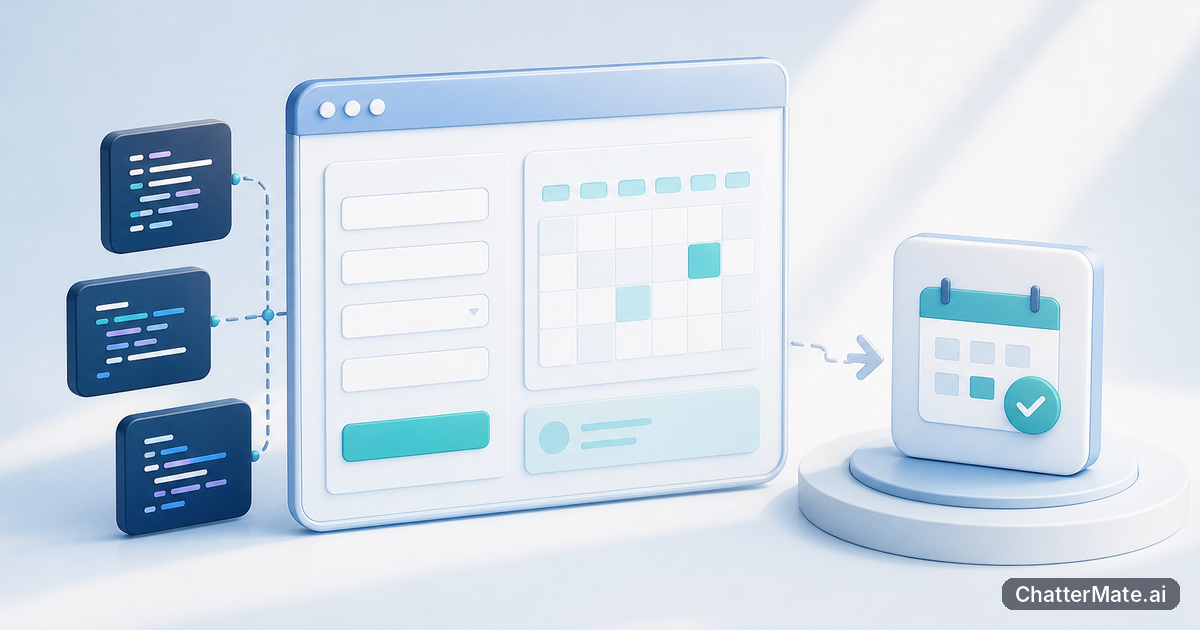
For teams exploring an internal tool or a small product change, the delay may come after the idea: someone has to turn a rough request into something people can inspect. ChatterMate’s Forge Cloud IDE is a browser-based environment for scaffolding, editing, previewing, and deploying web and mobile apps with AI agents. That gives a team a way to explore a concrete prototype instead of spending the first discussion trying to describe every screen in words.
Keep the first experiment small. For instance, ask for a basic prototype of a form your team currently handles manually, then review the preview with the people who would use it. Write down what is missing before expanding the scope. A prototype is a way to test an idea, not proof that a complete workflow is ready to run. If you are weighing chat against a coding environment, this comparison of Forge and AI chat can help you choose a sensible starting point.
Measure the savings and pick your next step
To understand how businesses can save time with AI automation, compare the whole process before and after—not just the minutes spent generating an answer. Include setup, checking, revisions, and any work needed to make the result usable. If a weekly task drops from two hours to one, record that improvement; if extra review erases the gain, adjust the task or pause the experiment. Also ask the team whether the result is dependable enough to use again.
Choose one workflow, one owner, and a short trial period. At the end, decide whether to keep it, refine it, or stop. ChatterMate can support that evaluation with side-by-side model comparisons and, when your test calls for a working app prototype, Forge. Visit ChatterMate to explore those options, then start with the task your team repeats most often. A measured small win is more useful than a sweeping automation plan with no clear result.
Frequently asked questions
Explore ChatterMate
Enjoyed this read?
Like, Share or comment below.