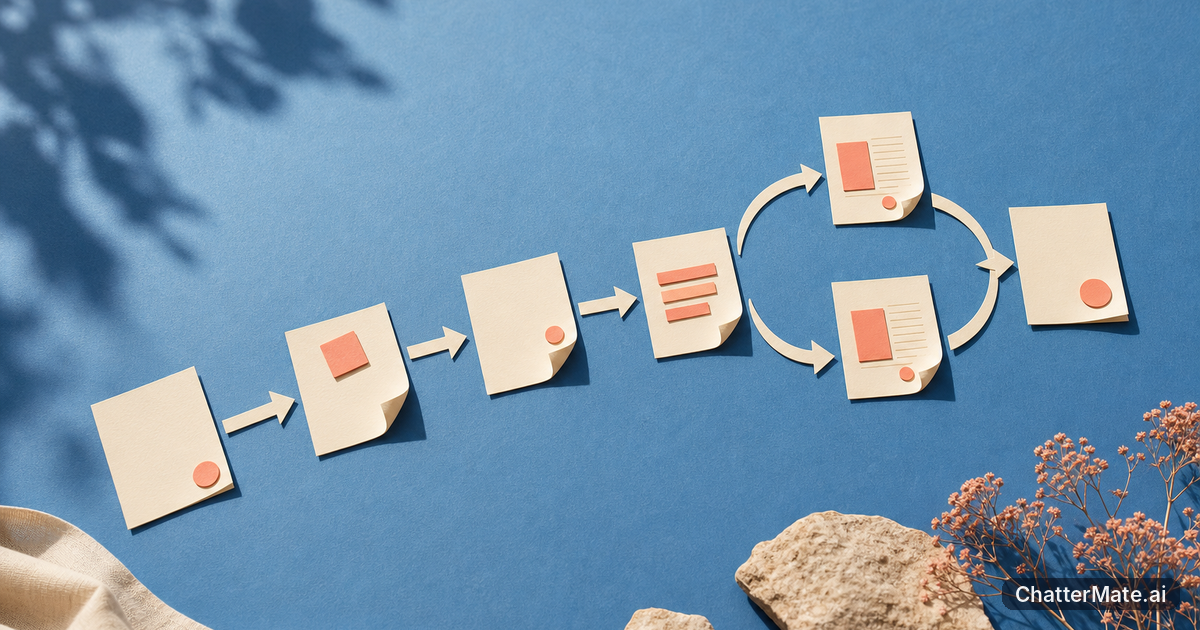
You have a useful idea, a publishing calendar, and more channels to fill than hours in the week. Rewriting the same message for every audience is slow; copying it everywhere makes each post feel misplaced. A better approach is to define one strong source idea, then reshape it into distinct assets with a repeatable process for checking the facts.
Open with the problem of reaching every channel without starting from scratch
Repurposing works when you reuse the thinking, not the same paragraphs. Imagine your team wants to share a simple household food-waste tip: before shopping, check the fridge, pick two ingredients to use first, plan three dinners around them, and buy only what is missing. That is one useful idea, but a reader opening a newsletter needs a different entry point from someone scanning a social feed or attending a team presentation.
Start by naming the audience and job for each asset. The blog can explain the routine; a newsletter can make it feel achievable this week; a social post can deliver one quick prompt. Give every format a purpose before you draft. Generative AI can help create options, but it cannot decide what your audience needs or verify an unsupported claim. Treat it as a production assistant working from your source material, not as the source itself.
Keep a short content plan beside the work: audience, channel, intended action, and deadline. That small map helps you avoid producing ten versions just because ten formats are possible. Make only the assets you can distribute and maintain.
Prepare one well-defined idea to repurpose across ten formats
Before asking for drafts, assemble a compact source pack. Include the central point in one sentence, the intended audience, three supporting details, any approved facts or figures with their sources, the action you want readers to take, and terms or claims to avoid. For the food-waste example, the central point is the four-step routine above. The supporting details are the fridge check, two ingredients, three planned dinners, and a shopping list limited to gaps. Do not add statistics unless you have a source and permission to use them.
From that source, plan ten distinct deliverables: a blog post, a newsletter, a LinkedIn post, an Instagram carousel, a three-post social thread, a short video script, a six-slide presentation, an infographic, a frequently asked questions sheet, and a one-page checklist. Each has a different shape and use, even though all come from the same idea.
Give a generative AI tool the source pack and ask for one format at a time, with audience, length, tone, and required facts specified. Ask it to flag missing information rather than fill gaps with guesses. If you are deciding where AI fits in a recurring workflow, this look at AI for routine time-saving tasks offers a useful starting point; the same principle applies here: delegate repeatable drafting, keep editorial decisions with your team.
Adapt the message for each format, then check accuracy and consistency
Set the level of detail to match the reader’s attention and intent. A blog post can explain the four steps, show a sample meal plan, and address common obstacles. A newsletter should lead with a relatable moment—finding wilted greens—and offer the routine as a practical fix. A LinkedIn post can share the core idea and invite readers to try it. The Instagram carousel can give one step per card; the three-post thread can build from the problem to the routine to a reminder. A video script should sound natural aloud, while the presentation should make each step visible at a glance.
The infographic should show the sequence clearly, not introduce extra advice. The FAQ can answer likely questions, and the checklist should be usable while someone checks their fridge. Keep the same central point and action across all ten assets, but change the lead, structure, examples, and depth. For guidance on choosing AI tools for different tasks, see this comparison of AI chat and other tools; whatever you use, your editorial checks remain essential.
Review every draft against the source pack. Check quantities, sequence, dates, names, and any factual claims; confirm that no version promises results the original idea does not support. Then compare the main point and call to action across formats. A shared fact sheet or approved source document makes this check faster. Have a subject-matter reviewer sign off on anything technical, and make a final human edit for voice and clarity. Variations should feel native to each channel, not like copy-and-paste with a new headline.
Choose one idea and run the workflow again
Make the process repeatable with a simple board or spreadsheet. Add columns for the source idea, audience, format, draft owner, review status, source links, and publishing date. Save the prompt that produced a useful first draft, but keep the source pack and review checklist alongside it; a prompt alone cannot preserve context or prevent an outdated detail from slipping through.
After publishing, note what readers used or responded to, then carry that learning into the next cycle. If the food-waste checklist gets shared but the long article is rarely opened, keep the checklist’s direct steps and test a shorter article introduction next time. Don’t assume one result explains everything: compare similar formats and audiences before changing the workflow.
Your next step: choose one idea your team already trusts, write its one-sentence core and supporting facts, and map it to ten formats before generating a single draft.
Frequently asked questions
Enjoyed this read?
Like, Share or comment below.