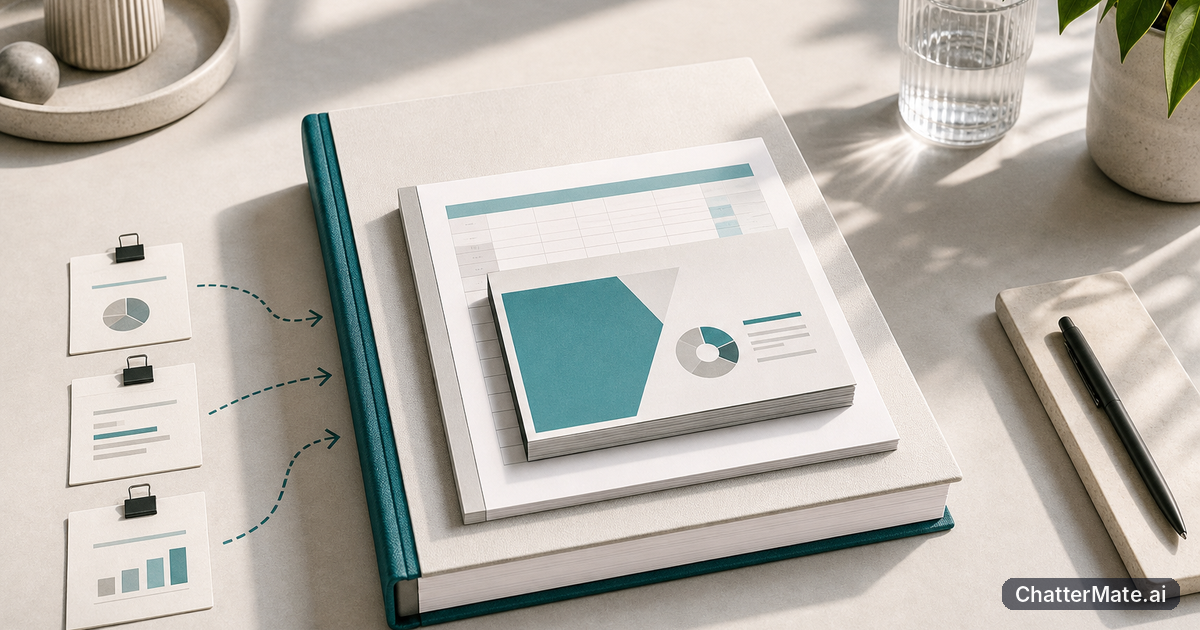
You have one sentence of direction, a meeting on the calendar, and no time to turn a blank slide into a decision-ready story. To turn a single prompt into a useful deck, give the AI a bounded assignment, then check the logic, evidence, and design yourself. The prompt gets you to a first draft; your judgment makes it ready for executives.
Define the decision before the slides
An executive deck is useful when it helps someone decide, approve, or redirect—not when it merely summarizes a topic. Before drafting, write the meeting outcome in one sentence: “Approve a 90-day pilot for the self-service onboarding flow.” Then tell the AI who will be in the room, what they already know, the decision needed, and any constraints, such as nine slides, 12 minutes, or a fixed budget. Name the materials it may use, and tell it not to invent figures, customer quotes, or market facts.
A compact prompt might read: “Create a nine-slide deck for the COO and finance lead. Recommend whether to fund a 90-day onboarding pilot. Use only the attached churn analysis and cost model; flag missing evidence. Include options, expected impact, risks, and a decision slide.” That is more useful than “make an onboarding presentation” because it defines the job and its boundaries. For more ways to make a request specific, see this guide to writing better AI briefs.
Ask for a storyline, not a pile of slides
Have the AI propose a slide-by-slide outline before it writes full slide content. This gives you a chance to fix the argument while changes are cheap. A practical executive narrative often moves from the decision and recommendation to the evidence, options, trade-offs, risks, and next steps. The order should answer the room’s main question, not follow the order of the source documents.
For the onboarding example, an outline might open with the requested approval, show where customers drop off, explain the proposed pilot, compare it with doing nothing, and finish with cost, risks, and a success measure. Ask for each slide’s takeaway as a complete sentence, plus the evidence needed to support it. If two slides make the same point, combine them; if a claim has no support, mark it for follow-up. The result is a narrative you can assess before spending time on layouts or speaker notes.
Check every claim against its source
A polished slide can make a weak claim look settled. Treat the draft as a set of statements to verify, especially numbers, forecasts, quotations, and causal claims. Ask the AI to attach a source or page reference to each factual point, and to label assumptions separately from observed results. Then open the underlying material yourself. If the cost model says a pilot costs $80,000 but the draft says $60,000, correct it before discussing visual polish.
Keep a simple review table with the slide number, claim, source, and status: confirmed, revised, or unresolved. Check that totals use the same time period and that comparisons are like for like. If the evidence does not support a confident recommendation, change the language rather than hiding the gap—for example, present an estimate as a range and name what would narrow it. This approach keeps AI in a drafting role, as explored in guidance on AI as a collaborator, while leaving accountability with the people presenting.
Make the draft ready for the room
Once the story and facts hold up, shape each slide around one takeaway. Replace paragraph blocks with a chart, comparison, or short list when that makes the point easier to scan. Use a consistent title style, restrained colors, and readable type; keep detail that belongs in the spoken explanation or appendix off the main slide. A deck can be concise without stripping away the context executives need to judge the recommendation.
Do a final pass as if you were seeing the slides for the first time. Can you understand the argument from the slide titles alone? Does the opening state the decision, and does the ending make the requested action clear? Check numbers, labels, citations, and speaker notes, then rehearse the talk against the actual meeting time. Your next step is simple: write the decision sentence, attach the trusted source material, and ask for an outline before asking for slides.
Frequently asked questions
Enjoyed this read?
Like, Share or comment below.